Zirconia crowns marry exceptional mechanical strength with a translucent beauty that rivals natural enamel, making them the first choice for patients who want durability without compromising on aesthetics. At Elf’s Smiles Dental Clinic in Antalya, we use high‑translucency 5Y‑TZP zirconia—an advanced yttria‑stabilised ceramic that reaches flexural strengths of 700 – 900 MPa while transmitting enough light to blend seamlessly with adjacent teeth.
Why Zirconia Outperforms Traditional PFM Crowns
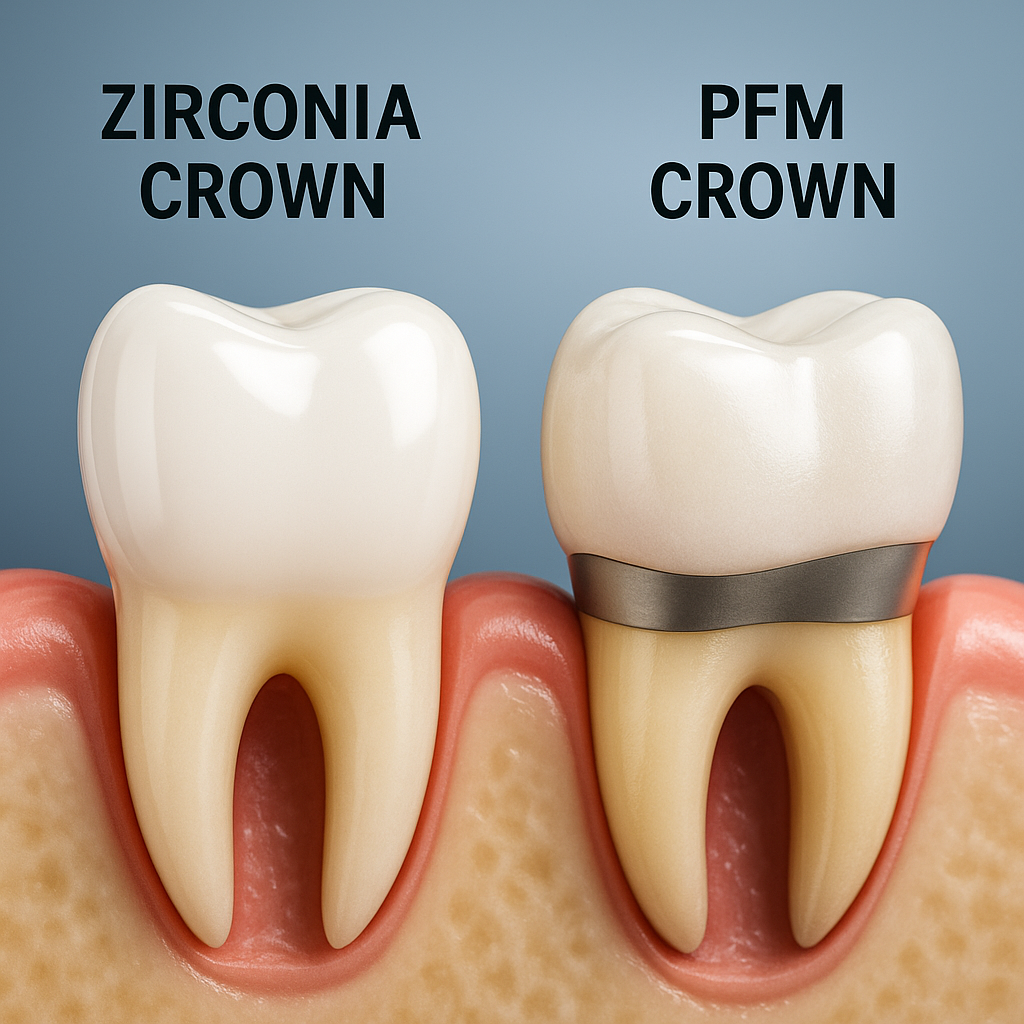
Porcelain‑fused‑to‑metal (PFM) restorations rely on an opaque metal substructure that can cause a dark gumline as soft tissue recedes. Zirconia’s naturally tooth‑coloured core eliminates this grey shadow and resists chipping at the porcelain interface because many designs are monolithic—milled from a single ceramic block—rather than porcelain layered. The result: fewer mid‑life repairs and a crown that stays colour‑stable for decades.
Digital Workflow for a Perfect Fit
Intra‑oral Scan – A handheld scanner captures a 3‑D model of the prepared tooth in seconds, sparing you the discomfort of traditional impressions.
CAD Modelling – Our technicians design the crown digitally, adjusting cusp anatomy and proximal contacts down to 20 µm accuracy.
CAM Milling – A five‑axis mill carves the crown from a pre‑sintered zirconia puck.
Sintering & Staining – The crown is fired at 1 450 °C, shrinking to final strength, then custom‑stained and glazed for lifelike character.
Try‑In & Bonding – After occlusion and shade are verified, we bond or lute the crown with a resin‑modified glass ionomer, ensuring a hermetic seal.
Strength Meets Biocompatibility
Zirconia is inert, contains no nickel or beryllium and exhibits minimal plaque accumulation, reducing inflammation in patients with a history of periodontal issues. Its low thermal conductivity shields the pulp from hot and cold stimuli, while fracture toughness far exceeds that of lithium‑disilicate glass‑ceramic. In independent five‑year studies, zirconia crowns showed survival rates above 97 % even on molars subjected to heavy bite forces.
Aesthetic Versatility
High‑translucency zirconia reflects and refracts light similarly to dentin, allowing us to use thinner margins—0.6 mm versus 1.2 mm for PFM—so more natural tooth structure is preserved. For anterior cases where maximum fluorescence and opalescence are critical, we can overlay a micro‑veneering ceramic just 0.3 mm thick, achieving “halo” effects and incisal translucency indistinguishable from neighbouring incisors.
Clinical Indications
Full‑coverage crowns on endodontically treated teeth
Implant‑supported single crowns and multi‑unit bridges
Bruxism cases where glass‑ceramic might fracture
Patients with metal allergies or aesthetic demands in the smile zone
Long‑Term Maintenance
Home care is the same as for natural teeth: soft‑bristle brushing, low‑abrasive toothpaste and floss or interdental brushes. Professional hygiene visits twice a year allow us to monitor margins and polish away surface stains without compromising the glaze. Should minor wear facets develop, intra‑oral polishing kits restore surface smoothness, maintaining antagonistic enamel safety.
Potential Limitations
While zirconia’s hardness is an asset, it can accelerate wear on opposing dentition if the occlusion is misaligned. Our digital articulation and chairside adjustments ensure even contact points and minimal occlusal interference. Furthermore, because zirconia is opaque relative to glass‑ceramics, severely discoloured underlying dentin may require a stump shade or minimal opaquer to mask dark substrates before bonding.
Treatment Timeline
Most cases require two visits over five to seven days: one for preparation and scanning, and one for final placement. For dental tourists, we offer an accelerated three‑day protocol using in‑house milling and rapid sintering furnaces without sacrificing strength or aesthetics.
Key Takeaway
Zirconia crowns offer a unique balance of resilience and beauty, outperforming older metal‑based solutions while preserving more tooth structure than porcelain‑fused alternatives. When fabricated through Elf’s Smiles fully digital workflow, they deliver a flawless marginal seal, natural translucency and confidence‑inspiring strength—ensuring your restored tooth looks and functions like new for years to come.